


My Little Princess : Stores
4.228.00 Reviews
App Specs
- Version
- 7.03.02
- Updated On
- License
- $4.49
- Downloads
- 10,000+
- Developer
- My Town Games Ltd
- Categories
- Educational
- Platform
- Android
Screenshots
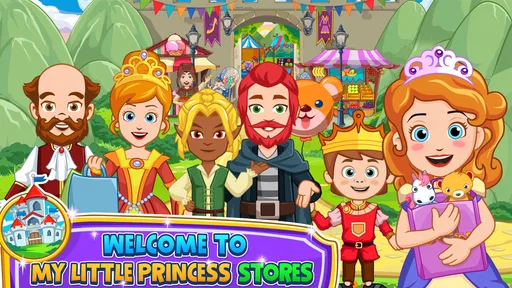
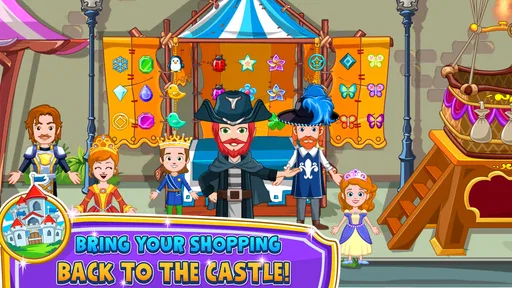
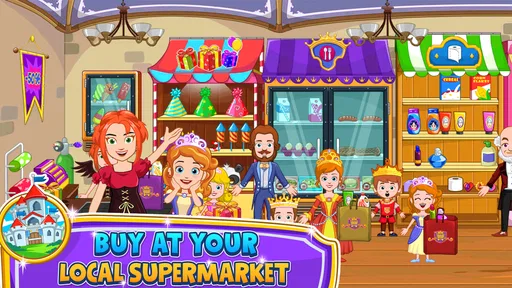
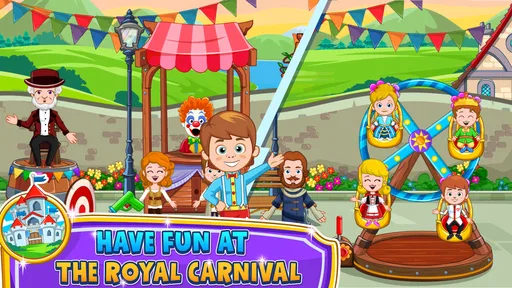
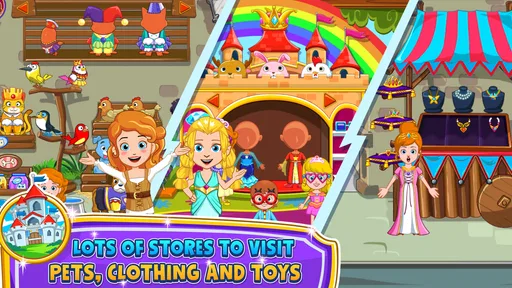
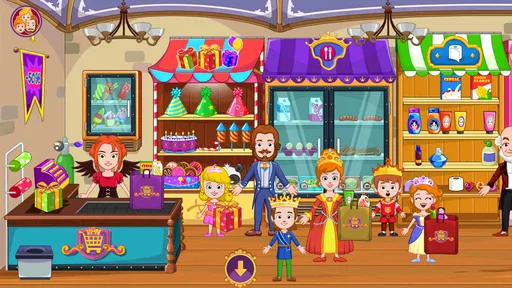
 Analysis by AppCompare
I spent time with My Little Princess as a child-focused educational game built around an interactive castle. My first impression was that it is less about winning and more about letting a child explore, move characters around, and create small stories from the objects and rooms on screen. That makes it a very different proposition from a spelling quiz, a number game, or a conventional level-based adventure.
The game is made by My Town Games Ltd and is aimed at Everyone. It costs $4.49, with in-app purchases listed at $0.99 per item. That makes the purchase decision fairly clear: this is a paid game with optional extra spending, rather than a free download that depends entirely on advertising or repeated prompts. For a family deciding whether it deserves space on a tablet or phone, the important question is not whether it offers competitive depth. The question is whether open-ended castle play is worth paying for.
Exploring the castle without a score hanging over the child
The central appeal is the castle itself. The store summary describes a place where a child can interact with just about everything, and that idea defines the experience better than a list of missions would. I found the attraction in tapping around, moving through the setting, and testing what could be picked up, changed, or used as part of an imaginary scene.
That open structure gives the game a gentle pace. A child does not have to understand a complicated objective before starting. They can begin with simple curiosity: look at a room, try an object, move a character, and see what happens. In my experience, this is useful for younger players who treat games as digital toys rather than as challenges that must be completed correctly.
The educational label should be understood in that broad sense. This is not the kind of educational title I would choose when I want structured practice in reading, arithmetic, spelling, or factual recall. Its learning value comes more from exploration, decision-making, sequencing pretend events, and expressing ideas through play. A child might arrange a little story in the castle, repeat it differently, and learn through that process even though the game does not feel like a lesson.
I also like that the lack of a visible competitive focus can make shared play easier. A parent can sit nearby and ask what is happening in the castle, while the child remains in control of the action. Rather than correcting answers, the adult can encourage the child to describe a character’s role, explain why an object belongs in a particular place, or invent what happens next. That turns a short session into a conversation without forcing the game to become a worksheet.
What the paid price means in practice
At $4.49, the game sits in the part of the children’s market where the initial purchase matters. I would not approach it as a free trial that happens to contain a castle. I would approach it as a small paid toy: something bought for a child who already enjoys imaginative play and is likely to return to the same setting in different ways.
Worth Reading Before You Choose

EA SPORTS FC Mobile 26 Is a Bigger Football Game, but It Takes Time

Flipboard Shows What News Apps Must Do Beyond the Feed

Switching to Android Auto Means Rethinking Your Driving Routine

Google Calendar Makes a Crowded Week Easier to Manage

Ludo King Makes the Most of the Minutes Between Plans

Baby Panda World Brings Quick Play to Modern Phones, but Its Game Library Feels Busy
The listed $0.99 per-item in-app purchases are worth considering before handing over a device. They do not change the basic fact that the game has an upfront price, but they introduce a second spending layer. I would make the purchase decision with the family’s rules in mind and check the device’s purchase protections before a child plays independently. The practical value of a paid game can feel different when a child can also encounter optional items inside it.
I appreciate that the cost can be judged more honestly than with a title that is free to install but constantly pushes monetized interruptions. Here, the buyer knows there is a purchase at the start. Still, I would not call the price automatically good value for every child. If a player quickly loses interest in role-play or wants clear goals, the same money may be better spent on a focused learning app or a game with more structured content.
The game has a 4.2 average from around 246 ratings, with roughly 28 written reviews, and it has passed 10K installs. Those figures suggest that it has found an audience, but I would not use them as a substitute for matching the game to the child. An open-ended title can be loved by one family and ignored by another, even when both see the same store score.
Small details that improve a play session
My most useful approach was to treat the castle as a prompt for short activities rather than leaving a child to wander indefinitely. Before opening the game, I might suggest making a royal breakfast, preparing a room for a visitor, or creating a story with a beginning, a problem, and an ending. These prompts give the open setting a little shape while preserving the child’s freedom.
A second useful habit is to let the child demonstrate the game instead of taking over the controls. When an adult starts tapping quickly, the experience can become a passive show. Asking the child to find a particular room, show how a character’s story begins, or recreate an earlier scene encourages memory and communication. This is one of the places where the game’s educational value becomes more noticeable than it is during unstructured tapping.
I would also use the castle as a calm transition activity rather than promising a long session. A short visit before dinner or after school can work well because there is no need to reach a checkpoint. The downside is that the same freedom can make stopping harder for some children: there is always another pretend event to invent. A simple timer or a clear “one story, then we stop” rule helps keep the game from becoming an open-ended negotiation.
Another trade-off is that open play rewards imagination, but it does not automatically teach a child how to use imagination. Some children will immediately invent characters and situations. Others may tap a few objects, become uncertain about what to do, and leave. For the second group, adult participation is not a minor extra; it may be the difference between a meaningful session and a brief look followed by boredom.
How it compares with more traditional children’s games
Compared with a phonics or mathematics app, this game offers less measurable practice. A parent looking for repeated letter sounds, counting exercises, or progress through lessons should choose a purpose-built learning tool instead. Those alternatives are stronger when the goal is a specific academic skill and the adult wants a clear sense of what was practiced.
Compared with a conventional adventure game, the castle is more relaxed but less demanding. There is no reason to expect the same sense of progression, challenge, or achievement that comes from completing levels. That is a strength for children who become frustrated by failure, yet a weakness for players who need goals to stay engaged.
It also differs from a simple digital coloring or drawing app. The castle provides a setting and characters that can support pretend narratives, so the child is not starting with a blank page. At the same time, a drawing app may be better for a child who wants to make something visually personal rather than manipulate an existing world.
Against other pretend-play games, the deciding factor is likely to be the castle setting and the child’s response to it. A child fascinated by rooms, royal stories, and moving characters may find plenty to revisit. A child who prefers vehicles, animals, construction, or fast action may not receive the same value from this particular theme. The game’s identity is narrow in a helpful way: it knows what kind of imaginative space it wants to provide.
Where the experience can become frustrating
The biggest limitation is the absence of a strong reason to return beyond the child’s own ideas. That is intentional, but it means replay value depends heavily on personality. I would not buy it expecting the game to keep every child occupied simply because the castle contains many interactive possibilities.
There is also a difference between interaction and learning. Tapping an object and seeing a response can be satisfying, but not every response leads to a deeper activity. Parents who want a carefully sequenced educational program may find the experience too loose. The educational category describes the style of engagement more than a curriculum.
The paid model may create friction for families who prefer to test a game extensively before paying. The optional $0.99 items add another point to discuss with children, especially if the device is shared. I would explain clearly that the game is already purchased and that additional items are separate decisions, then use the platform’s purchase controls rather than relying on a child to understand the difference.
Device compatibility is also part of the decision. The current version is 7.03.02 and requires Android 8.0 or later. That is straightforward for a reasonably recent Android device, but an older phone or tablet may not qualify. I would check the device before planning the purchase, particularly if the game is intended for a hand-me-down tablet.
Who is most likely to get their money’s worth?
I think the best match is a young child who enjoys pretend stories and can spend time exploring without needing a reward screen after every action. It is especially suitable for a parent who wants to join occasionally, offer story prompts, and turn the castle into a shared conversation. The game can work as a quiet indoor activity, a travel distraction, or a starting point for role-play away from the screen.
It may also suit siblings if they can share control peacefully. One child can invent the situation while another moves characters or chooses objects. That arrangement can encourage cooperation, although the game itself cannot solve disagreements over who gets to tap. For younger players, adult guidance may still be needed to keep the session collaborative rather than competitive.
I would skip it for a child who asks for explicit goals, difficult puzzles, fast action, or a strong sense of unlocking progress. I would also skip it if the main purpose is academic drilling. In those situations, the upfront price is better directed toward an app whose structure directly matches the desired outcome.
Parents should also think about how much supervision they want around optional purchases. The item price is small, but repeated small purchases can still matter. If the family wants a completely fixed-cost experience with no additional buying decisions, this may not be the cleanest fit, even though the initial price is clearly stated.
My buying recommendation
For me, the value rests on whether the castle becomes a reusable stage for a child’s own stories. If it does, the $4.49 entry price is reasonable for a paid imaginative game, provided the family is comfortable managing the separate $0.99 items. I would buy it for a child who already likes open-ended role-play, not as a universal educational solution and not as a guaranteed boredom cure.
The developer, My Town Games Ltd, has positioned the experience around accessible interaction rather than high-pressure achievement. That makes it approachable for children rated Everyone, and the simple premise is easy to explain: explore the castle and make something happen. The trade-off is that the child supplies much of the creativity and direction, so the game’s quality depends partly on what the player brings to it.
My final view is a cautious recommendation. Buy it when you want a paid, castle-themed digital toy for imaginative play and are willing to guide the first few sessions. Skip it when you need formal lessons, challenging objectives, or a completely predictable one-time cost with no optional items. In the right home, it can turn a tablet into a small storytelling space; in the wrong one, it may feel like an attractive setting without enough structure to hold attention.
Pros
- Bright
- child-friendly graphics make exploring each store engaging.
- Simple touch controls are easy for young children to understand.
- Characters and locations encourage imaginative
- open-ended play.
- Works well for short play sessions without complicated objectives.
- The store setting adds variety to the wider My Little Princess world.
Cons
- Some areas and characters may require additional purchases to unlock.
- Gameplay can feel repetitive after the initial exploration.
- Limited challenge may not appeal to older children.
- Frequent free-play interactions offer little educational guidance.
- Performance may vary on older phones or tablets.
FAQs for My Little Princess : Stores
What is My Little Princess: Stores?
My Little Princess: Stores is a child-friendly imaginative play game where children can explore different shops and create their own stories. Players can move characters around, interact with objects, try on items, and discover playful surprises. There is no strict mission structure, so the experience focuses on creativity, role-playing, and free exploration rather than competition or traditional levels.
Is My Little Princess: Stores suitable for young children?
The game is designed with young children in mind, thanks to its colorful visuals, simple touch controls, and open-ended gameplay. Children can usually understand the basic interactions without reading extensive instructions. However, parents should still review the recommended age rating, especially because the game may include optional purchases or features that are better managed with parental supervision.
Does My Little Princess: Stores require an internet connection?
Much of the core gameplay can generally be enjoyed offline after the application has been installed, which is convenient for travel or situations without Wi-Fi. An internet connection may still be needed for downloading the game, receiving updates, restoring purchases, or accessing certain connected features. Availability can vary by device and version, so checking the store description is recommended.
Is My Little Princess: Stores free to download and play?
The game may be available as a free download, but some locations, characters, objects, or additional content can require in-app purchases. The free version offers an opportunity to test the style and basic interactions before spending money. Parents should check the current Google Play or App Store listing and enable purchase restrictions if children use the device independently.
What can children do in My Little Princess: Stores?
Children can explore store environments, move characters between areas, interact with colorful objects, and invent stories based on everyday shopping and role-playing situations. The appeal comes from discovering details and combining items in different ways rather than completing difficult challenges. It is best suited to players who enjoy relaxed, creative play, although children seeking fast action or competitive gameplay may find it too simple.


